
EPA and DHA are often grouped together under the term omega-3, but from an ingredient-development perspective they are not the same thing.
EPA — eicosapentaenoic acid — and DHA — docosahexaenoic acid — are both long-chain omega-3 polyunsaturated fatty acids. They occur in marine food systems, can be produced by selected microalgae, and are widely used in nutraceutical, dietary supplement and nutrition products.
But their molecular structures differ, their biological roles are not identical, and commercial ingredients can contain very different EPA:DHA profiles.
For ingredient buyers and formulators, that means a specification stating only “omega-3” is often not enough.
The more useful questions are:
- How much EPA does the ingredient contain?
- How much DHA?
- What is the EPA:DHA ratio?
- What is the total fatty-acid profile?
- In what format are those fatty acids supplied?
- Does the ingredient meet the intended formulation, regulatory and commercial requirements?
Those questions matter whether the omega-3 originates from fish, algae or another source.
What are EPA and DHA?
EPA and DHA are two of the principal long-chain omega-3 fatty acids.
The US National Institutes of Health identifies three omega-3 fatty acids that receive most scientific attention:
- alpha-linolenic acid, or ALA
- eicosapentaenoic acid, or EPA
- docosahexaenoic acid, or DHA
EPA is commonly described chemically as C20:5 n-3. It contains 20 carbon atoms and five double bonds.
DHA is C22:6 n-3. It contains 22 carbon atoms and six double bonds.
That structural difference is small enough that they are often discussed together, but significant enough that they should not be assumed to behave identically in biological systems or commercial formulations.
The human body can convert some ALA into EPA and then into DHA, but the conversion is limited. This is one reason dietary sources of preformed EPA and DHA remain commercially important.
EPA and DHA are related, but not interchangeable
Consumer-facing omega-3 marketing often reduces EPA and DHA to simple statements about different health functions.
The scientific picture is more complicated.
EPA and DHA participate in overlapping biological processes, while research also indicates that their effects can differ in some physiological contexts.
For ingredient development, however, the most immediate distinction is simpler:
EPA and DHA are different molecules, and an ingredient containing one does not automatically provide an equivalent amount or function of the other.
An oil containing:
- 40% DHA and very little EPA
is a materially different ingredient from one containing:
- 30% EPA and very little DHA
and both differ again from an ingredient containing:
- a balanced EPA/DHA combination.
That difference flows through product positioning, formulation, labelling, specification and potentially regulatory requirements.
20 carbon atoms
5 double bonds
Related molecules with overlapping biological roles
22 carbon atoms
6 double bonds
Why does the EPA:DHA ratio matter?
The EPA:DHA ratio tells a buyer how much of each fatty acid is present relative to the other.
Depending on the intended product, a formulator might require:
- predominantly EPA
- predominantly DHA
- a defined EPA:DHA combination
- a minimum total omega-3 concentration
- a particular fatty-acid profile across the entire oil
A supplier therefore needs to provide more detail than a broad claim such as “contains omega-3”.
For technical evaluation, useful information can include:
- EPA as a percentage of total fatty acids
- DHA as a percentage of total fatty acids
- EPA and DHA per gram of ingredient
- total omega-3 content
- other major fatty acids
- analytical method
- basis of reporting
- batch-to-batch variation
The exact specification depends on the application and market.
Why have many commercial algal omega-3 products historically focused on DHA?
Algae-derived omega-3 is sometimes treated as if it were a single ingredient category.
It is not.
Microalgae encompass a very broad range of organisms, and different species and strains can produce very different fatty-acid profiles.
Historically, a substantial part of the commercial algal omega-3 market has been associated with DHA-rich oils, particularly from organisms selected for strong DHA production.
That does not mean microalgae are inherently DHA-only organisms.
Peer-reviewed literature documents microalgae capable of producing:
- DHA-rich profiles
- EPA-rich profiles
- combined EPA and DHA
- broader polyunsaturated-fatty-acid profiles
The commercial profile depends on the organism, cultivation conditions and downstream processing system.
For an EPA-focused business, this distinction matters because a production platform developed around a DHA-rich organism cannot simply be assumed to produce an equivalent EPA-rich ingredient.
How do microalgae produce EPA and DHA?
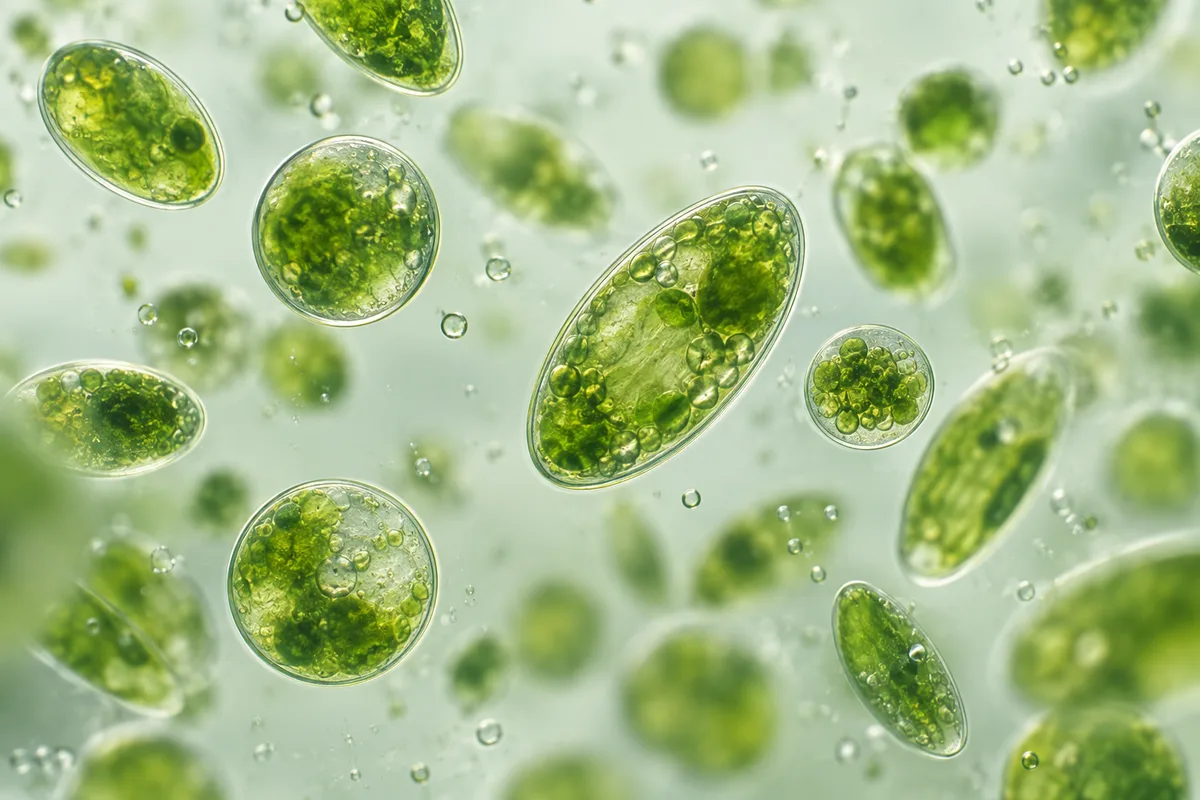
Selected microalgae synthesise long-chain polyunsaturated fatty acids as part of their cellular lipid metabolism.
The amount and composition can depend on:
- species
- strain
- temperature
- light conditions
- nutrient availability
- growth phase
- salinity where relevant
- carbon supply
- cultivation method
- physiological stress
Research has shown that cultivation conditions can alter both total lipid accumulation and the relative proportions of EPA, DHA and other fatty acids.
That creates opportunity, but it also creates a development challenge.
A technically promising strain must do more than produce the desired fatty acid in a laboratory test.
It needs to demonstrate:
- repeatable biomass productivity
- repeatable fatty-acid composition
- culture stability
- practical harvestability
- viable downstream recovery
- acceptable energy demand
- consistent finished-product quality
Commercial ingredient development therefore sits at the intersection of biology and process engineering.
Does the algae species determine whether the product is EPA-rich or DHA-rich?
The biological source is one of the major determinants, but not the only one.
Different microalgae have different natural lipid profiles.
Some organisms are recognised for higher DHA production, while others can be strong EPA producers.
Even within the same species, however, performance may vary by strain and operating conditions.
For this reason, commercial development should evaluate the actual production organism rather than relying on broad species-level assumptions.
Important factors include:
- total lipid content
- EPA content
- DHA content
- productivity per unit of cultivation volume
- culture stability
- response to environmental conditions
- downstream processing behaviour
- final product recovery
The best organism is not necessarily the one with the highest EPA percentage in a single laboratory sample.
What matters is the amount of saleable, specification-compliant ingredient that can be produced consistently.
What does this mean for ingredient formulators?
The difference between EPA and DHA becomes commercially important when a new ingredient enters a finished formulation.
Target fatty-acid profile
The first question is whether the final product requires EPA, DHA or a defined combination.
This should be established before ingredient qualification starts.
Ingredient concentration
An oil with a higher EPA or DHA concentration may allow a smaller inclusion rate to deliver the required finished-product amount.
However, concentration alone should not determine supplier selection.
Product format
Omega-3 ingredients can appear in several forms, including:
- refined oil
- concentrated oil
- encapsulated oil
- emulsified systems
- dried powders
- whole-cell microalgae ingredients
The appropriate format depends on the finished product and manufacturing process.
Oxidative stability
Both EPA and DHA are highly unsaturated fatty acids.
That means oxidation control is an important part of ingredient handling and product design.
Relevant considerations can include:
- oxygen exposure
- temperature
- light
- storage conditions
- antioxidant systems
- packaging
- processing conditions
- shelf life
Formulators should evaluate actual stability data rather than assuming all omega-3 oils perform the same way.
Sensory performance
Oxidation and other components of an ingredient can influence flavour and odour.
Sensory requirements can be particularly important in:
- beverages
- powders
- gummies
- functional foods
- chewable products
A capsule formulation may tolerate characteristics that would be unacceptable in a beverage.
Regulatory requirements
Regulatory treatment can depend on:
- ingredient source
- organism
- production method
- concentration
- intended use
- dose
- claims
- target market
A product developer should therefore assess the regulatory status of the specific ingredient rather than assuming that all algae-derived EPA or DHA materials share the same position.
Is algae-derived EPA better than algae-derived DHA?
Neither fatty acid can sensibly be described as universally “better”.
The appropriate ingredient depends on the target product.
A DHA-focused formulation may require a DHA-rich oil.
An EPA-focused formulation may require a high-EPA ingredient.
Another product may require both.
The commercial objective should be to match the fatty-acid profile to the product requirement rather than treat one omega-3 as intrinsically superior.
This is particularly important in B2B ingredient development, where specification matters more than broad category messaging.
Is algal omega-3 always EPA and DHA together?
No.
The term “algal omega-3” describes the biological source, not a fixed composition.
An algae-derived ingredient can be:
- predominantly DHA
- predominantly EPA
- a mixture of EPA and DHA
- a broader lipid ingredient containing other omega-3 fatty acids
For procurement and formulation purposes, the actual Certificate of Analysis and product specification should therefore take priority over category labels.

What should an ingredient buyer ask about EPA and DHA?
When evaluating a new algal omega-3 ingredient, useful questions include:
What is the actual EPA content?
Ask for the measurement basis and analytical method.
What is the DHA content?
Even an EPA-focused ingredient may contain some DHA or other fatty acids.
What is the full fatty-acid profile?
This gives more information than EPA and DHA values in isolation.
How consistent is the composition between batches?
Commercial formulation requires predictable input material.
What causes variation?
Biological production systems can respond to cultivation conditions, so suppliers should understand and control key process variables.
What is the finished ingredient format?
Oil, powder and whole-cell material can behave very differently.
How is oxidation managed?
Ask about oxidation specifications, handling, antioxidants, packaging and stability.
Has the ingredient been tested in the intended application?
Actual formulation testing is more useful than assuming compatibility from the analytical specification.
What regulatory position applies?
This should be confirmed for the organism, process, format, intended use and target market.
Why EPA-specific development matters
A company seeking an EPA-rich ingredient cannot assume that any existing algal omega-3 production system will automatically deliver the required result.
EPA-focused development requires alignment between:
- strain selection
- cultivation performance
- fatty-acid composition
- biomass productivity
- downstream recovery
- product concentration
- stability
- customer specification
- economics
This is one reason biological productivity should not be considered in isolation.
A cultivation system that produces more biomass but less EPA per kilogram may not produce the best commercial outcome.
Likewise, a strain with a high EPA percentage but poor growth or difficult downstream processing may not be commercially attractive.
The relevant metric is ultimately the consistent production of specification-compliant ingredient.
Where NuFoods Biotech fits
NuFoods Biotech is developing an EPA-focused microalgae ingredient platform in New Zealand.
The current programme is intended to evaluate and validate:
- suitable microalgae biology
- repeatable cultivation performance
- EPA and broader fatty-acid composition
- culture stability
- downstream recovery
- product quality
- energy requirements
- customer specifications
- regulatory requirements
- commercial production economics
NuFoods is not treating the broader algae omega-3 market as a single interchangeable category.
Its development work is focused on whether an EPA-rich product can be produced consistently within a controlled cultivation and downstream-processing system and meet the requirements of real ingredient customers.
Final product composition, concentration and format remain subject to biological, process and customer validation.
FAQ
What is the main difference between EPA and DHA?
EPA and DHA are both long-chain omega-3 fatty acids, but EPA contains 20 carbon atoms and five double bonds, while DHA contains 22 carbon atoms and six double bonds. They share some biological functions but are not chemically or commercially identical.
Is EPA better than DHA?
Not universally. The appropriate fatty acid depends on the intended product, formulation, nutritional objective, regulatory requirements and ingredient specification.
Can microalgae produce both EPA and DHA?
Yes. Different microalgae species and strains can produce EPA, DHA or combinations of both. The fatty-acid profile varies considerably between organisms and can also be influenced by cultivation conditions.
Why are many algae omega-3 products associated with DHA?
A substantial portion of the established commercial algal omega-3 market has historically used organisms and production systems selected for strong DHA production. Other microalgae are capable of producing EPA-rich profiles.
What does EPA:DHA ratio mean?
The EPA:DHA ratio describes the relative amount of EPA compared with DHA in an ingredient or formulation. It can be important where a product requires a defined fatty-acid profile.
Is algal EPA the same molecule as fish-derived EPA?
Yes. EPA is eicosapentaenoic acid regardless of biological source. However, the finished oils can differ in concentration, fatty-acid profile, processing, sensory characteristics, oxidation stability, contaminants and regulatory status.
What should buyers look for on an omega-3 ingredient specification?
Key information can include EPA content, DHA content, total fatty-acid profile, ingredient format, oxidation parameters, contaminants, stability, analytical methods, traceability, regulatory status and batch consistency.
References / Further Reading
- US National Institutes of Health, Office of Dietary Supplements. Omega-3 Fatty Acids — Health Professional Fact Sheet.
Authoritative overview of the chemistry and nutritional context of ALA, EPA and DHA.
- Karrar E, Albakry Z, Mohamed Ahmed IA, et al. Docosahexaenoic acid and eicosapentaenoic acid from microalgae: Extraction, purification, separation, and analytical methods. Algal Research. 2024;77:103365.
Review covering microalgae as sources of EPA and DHA and the extraction, separation and analytical methods used for both fatty acids.
- Li X, Liu J, Chen G, Zhang J, Wang C, Liu B. Extraction and purification of eicosapentaenoic acid and docosahexaenoic acid from microalgae: A critical review. Algal Research. 2019;43:101619.
Reviews variation in EPA and DHA content between microalgae and the downstream methods used to recover and purify both fatty acids.
- Jakhwal P, Biswas JK, Tiwari A, Kwon EE, Bhatnagar A. Genetic and non-genetic tailoring of microalgae for the enhanced production of eicosapentaenoic acid (EPA) and docosahexaenoic acid (DHA) — A review. Bioresource Technology. 2022;344:126250.
Reviews biological and cultivation approaches used to influence EPA and DHA production in microalgae and highlights the importance of biomass productivity as well as lipid composition.
- Veerasamy V, Neethirajan V, Singarayar MS, et al. Microalgal biomass and lipid synergy for omega fatty acid enrichment: A sustainable source for food supplements & nutraceuticals. Algal Research. 2024;80:103514.
Reviews the relationship between microalgae cultivation, biomass production, lipid pathways and EPA/DHA enrichment for nutraceutical applications.